Why Andreas Ortner's Work Is So Addictive to Look At
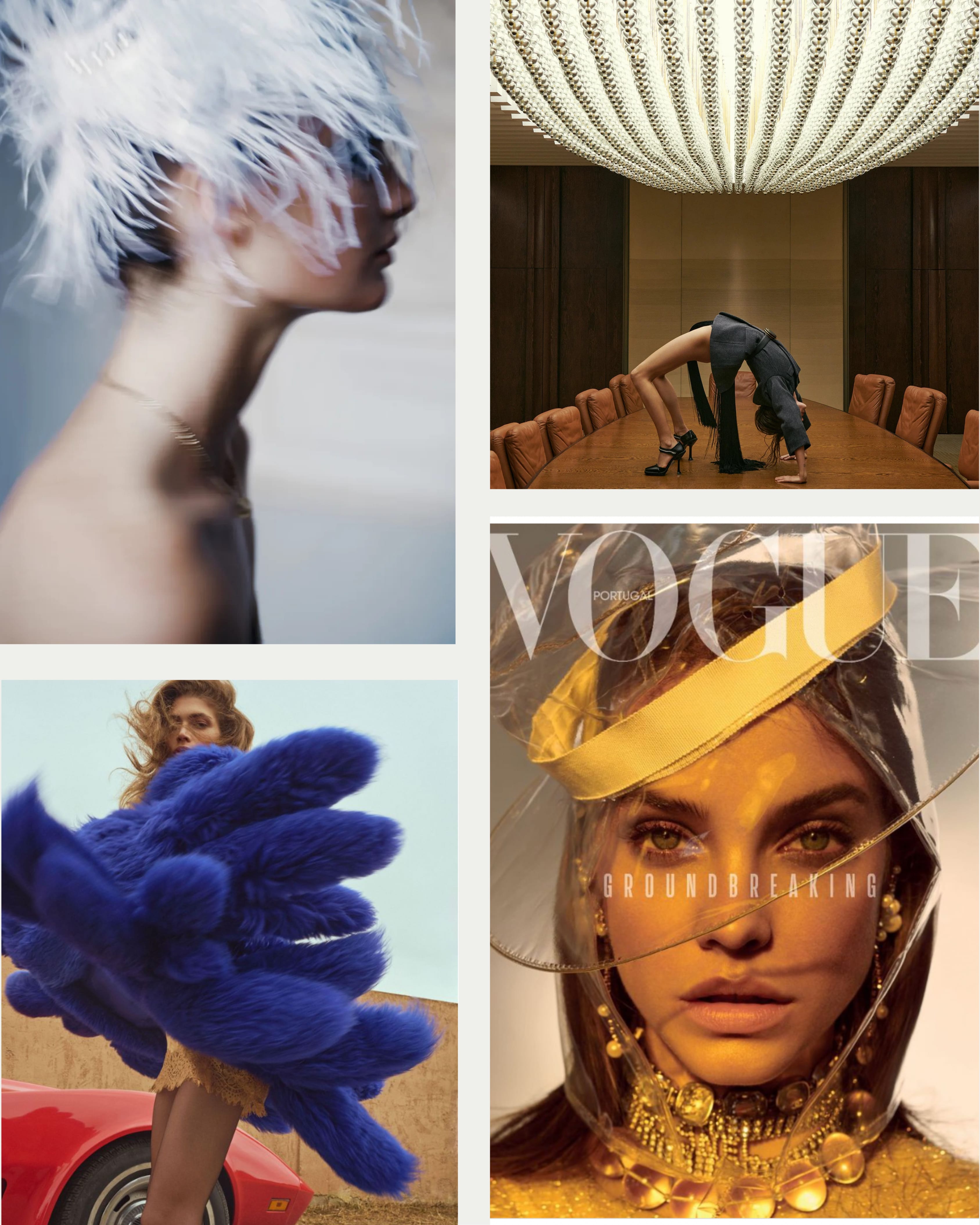
Born in Innsbruck and shaped by a self-directed path into fashion photography, Andreas began in 2005 with something almost disarmingly simple: a flea market Pentax bought in Brooklyn. That detail matters, because even now — two decades and countless editorial pages later — there's still a tactile, instinctive quality in his work that feels less engineered and more felt. Like he learned image-making from looking at life first, and cameras second.
Ortner operates firmly within the orbit of high fashion — think Vogue editorials, international publications, major cultural platforms — but his images don't behave like they are auditioning for that world. They don't try to impress it. Instead, they settle into it with a quiet authority. There's a kind of internal certainty in his frames, as if the photograph already knows it belongs before anyone else has decided.
What makes his work so compelling is not spectacle, but tension. His images often sit in that in-between space: polished yet human, constructed yet emotionally loose. They carry the surface clarity of luxury fashion photography, but underneath that gloss is something less controlled — an emotional residue that refuses to be fully styled away.
Over the years, Ortner has extended this visual world into exhibitions such as "UN HOMMAGE À LA PASSION", shown across W Hotels in Europe and at Art Basel in Miami and Tokyo. These presentations don't feel like departures from his editorial practice so much as expansions of it — his images stepping out of the magazine page and into spatial experience.
But what actually defines Ortner's presence in contemporary fashion photography is consistency of tone. His images don't chase novelty for its own sake. Instead, they return, again and again, to a particular kind of cinematic stillness — where glamour is present, but never hollow; where beauty is constructed, but never empty of feeling.